

The marketing team at Zomato could not hide its excitement when the nation applauded the observation skills of their founder: Mr. Deepinder Goyal, in a recent Shark Tank India episode. Team Zomato quickly garnered organic digital impressions by broadcasting the video snippet over social media platforms. The recipient was a contestant who missed to proofread his advertisement banner and was schooled for lacking the requisite “Attention to Detail”.
The term, “Attention to Detail” is self-explanatory and refers to the keen attention devoted to even the minutest of activities during the execution phase. This skill is one of the most sought for organizations in the era of digital and social media, as the lack of it can result in wiping out billions of dollars in shareholder worth.
Lessons learnt the hard way
Below are some examples of famous individuals and organizations who had to face consequences because of a seemingly trivial miss and the lack of an “Attention to Detail” mindset.
I. NASA
The National Aeronautics and Space Administration or NASA, is renowned across the globe for its groundbreaking space research and exploration programs. NASA, however, is also infamously accredited with conducting one the most expensive typographical errors in the US history.

Picture: The Mariner 1 spacecraft (Pic Credit: Wikipedia)
The incident dates back to July 1962, when US Marinier 1 rocket, costing $18.5 Million ($186 million in today’s dollars) was lost shortly after take-off due to a missing hyphen in the system code. Author Arthur C Clarke in his book: The promise of Space, denoted the typo as “the most expensive hyphen in history”.
II. CITIBANK
In August 2020, the American banking giant: Citibank accidentally wired $900 Million to lenders of the cosmetic group Revlon. The bank in its capacity as a loan agent of the cosmetic company Revon, was supposed to send $8 Million as interest amount to the lenders. But the officials accidentally transferred the entire principal amount which was not yet due on the day of transfer.
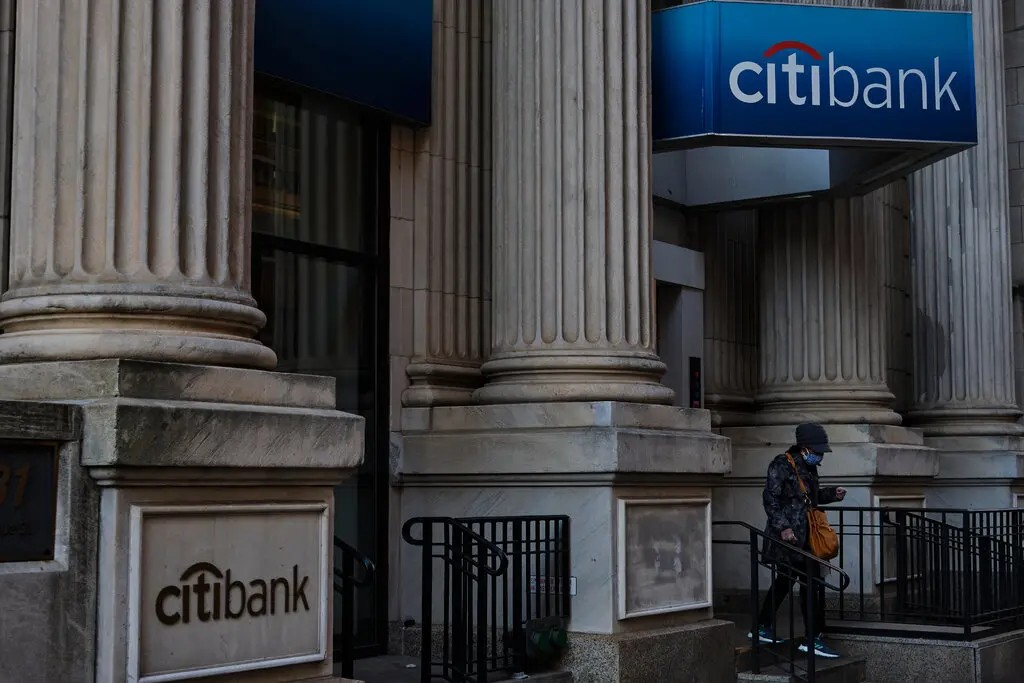
Picture: A Citibank branch (Pic Credit: NY Times)
Upon realizing the mistake, the bank was unable to recover around $500 Million from the creditors. But Citibank lost its appeal in the U.S. court against the remaining creditors, who refused to return the money. The court ruled that a mistake in transfer of nearly $1 billion was borderline irrational for one of the most sophisticated financial institutions of the world.
The incident dubbed as the most expensive banking blunder served as an eye-opener for the industry. At the time of the incident, the bank followed a “Six-Eyes” protocol, which required action from three individuals assuming the roles of maker, checker and approver respectively. However, the mistake was due to a system design error which did not prompt when wrong checkboxes were selected by the checker before a final go ahead by the approver.
III. PEPSI
We’ve all seen that marketing glitches lead to a reputation loss for the organization in question, in addition to the loss in revenue and market share. However, this glitch in a sales campaign by Pepsi led to riots in the Philippines and the death of around 5 people.
The incident dates back to 1992 in the Philippines, where Pepsi conducted a marketing campaign named “Pepsi Number fever”, in order to boost its sales. The campaign resulted in revenue gain for the organization from $10 Million to $14 Million and rise of market share from 19% to 25% in the country’s cola industry. The company had earmarked a budget of $2 Million to reward lucky individuals who would retain a Pepsi bottle cap bearing a randomly drawn number.
Picture: The Logo for the Sales campaign (Pic Credit: Wikipedia)
The drawn number was 349, and to the dismay of the organization, the bottling team had actually printed 8 lakh bottles bearing the number. The theoretical value of these caps was evaluated to be around $32 Billion in prize money. Upon realizing the mistake, Pepsi offered $18 to the cap holders and was claimed by a section of cap-holders for a cumulative amount of $9 Million. However, trouble did not end here for Pepsi, as they further had to face boycotts, violent mob action and were also fined by the trade body for code violation.
IV. Shri Narendra Modi
It’s election season in India, and the discussion is void without the mention of the current Indian Prime Minister, Shri. Narendra Modi. Mr. Modi is often praised within the political circle for his oratory skills and his ability to resonate his thoughts with the common people. This requires a lot of preparation, and he acknowledges the role of his vast organizational experience for this capability.
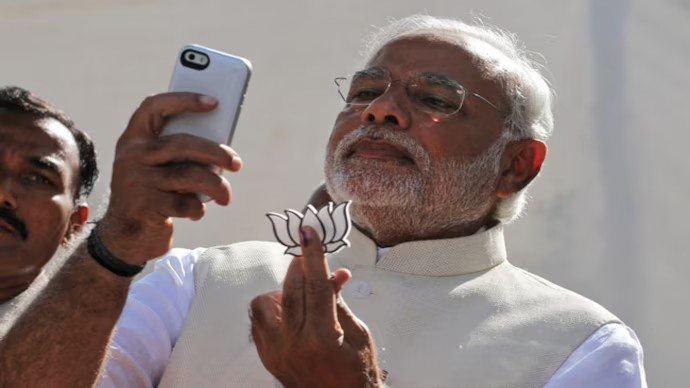
Picture: Shri. Narendra Modi outside a polling booth in 2014 (Pic Credit: NDTV)
However, in an incident dating back to 2014, Mr. Modi had to suffer criticism due to lack of situational awareness and was reprimanded by the Election Commission of India (ECI) for violation of Poll guidelines. As per the Model Code of Conduct (MCC), a person is not allowed to flash a party symbol in any form within the 100 meters range of a polling booth. The violation of this rule by the prime ministerial candidate of the opposition party drew a lot of criticism from the political leaders prompting the ECI to undertake action against Mr. Modi.
References:
https://economictimes.indiatimes.com/magazines/panache/typos-missing-commas-and-other-grammatical-mistakes-that-lead-to-huge-losses/no-room-for-error/slideshow/65337088.cms/ — Economic Times, Aug 09, 2018
The Most Expensive Typos in the World | Reader’s Digest (rd.com) — Reader’s Digest, Jul 27, 2021
A PEPSI GIVEAWAY, GONE WRONG — The Washington Post — The Washington Post, July 29, 1993
Narendra Modi Flashes BJP’s Party Symbol: Who Said What (ndtv.com) — NDTV, April 30, 2014